Ask for mashed plantains at a Dominican restaurant and you will get a fair question back: mofongo or mangu? They share an ingredient and a general idea, and that is where the similarities end. Here is the difference, once and for all.
The short answer
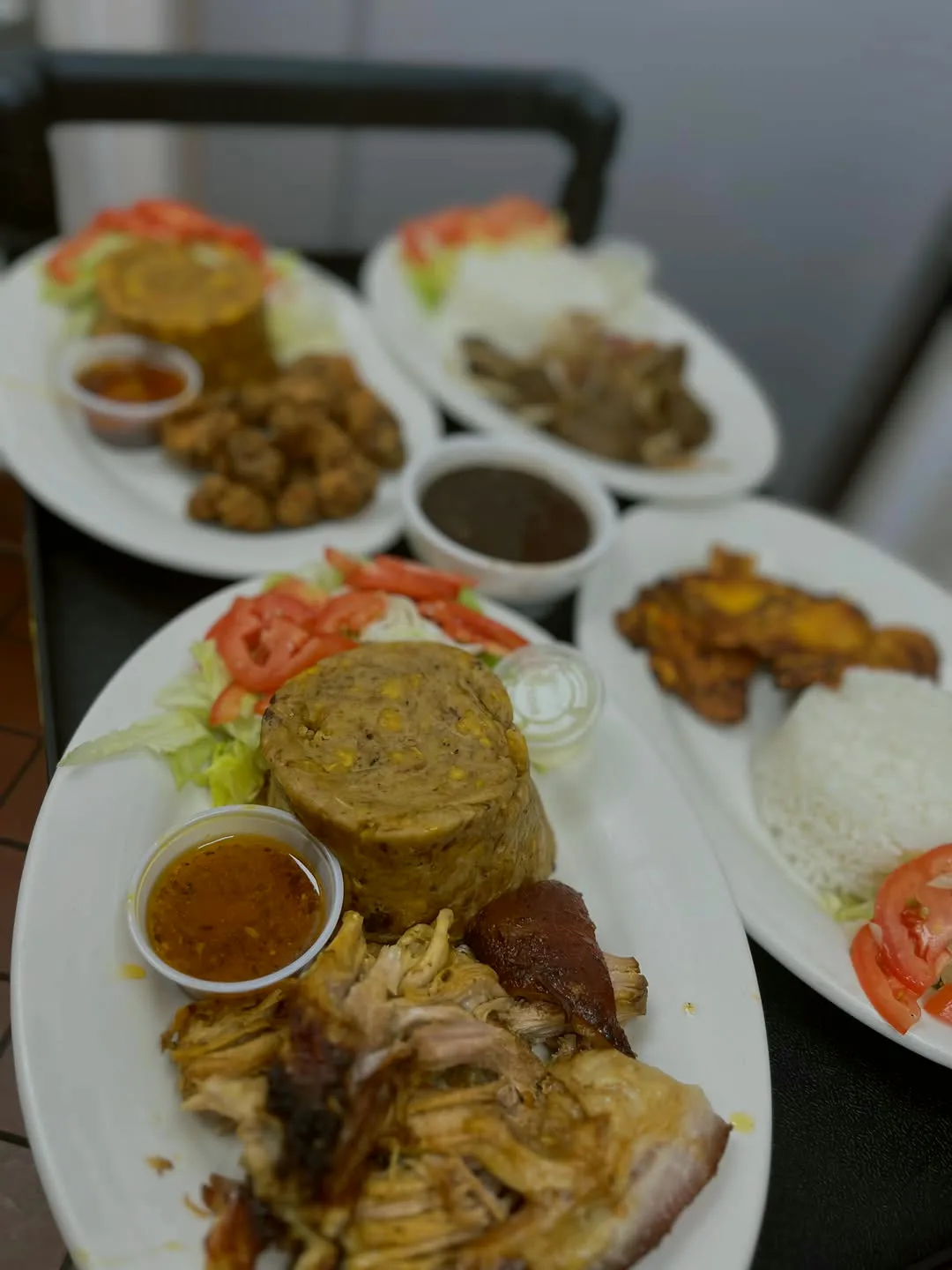
Mangu is boiled green plantains mashed with butter until soft and creamy, usually topped with pickled red onions and served at breakfast. Mofongo is fried green plantain chunks mashed in a pilon, a wooden mortar, with garlic and chicharron, crispy pork skin, then shaped into a dense, savory mound and served as a main dish, often with meat or a little broth to pour over.
Boiled versus fried. Creamy versus dense. Breakfast versus dinner. Same plant, two different worlds.
Texture: the biggest difference
Mangu is smooth, closer to mashed potatoes, made to be scooped up with fried salami, cheese and eggs. Mofongo has real structure. Because the plantains are fried before mashing, every bite has crisp edges, soft centers and crunchy bits of chicharron throughout. You can carve into a mofongo. You cannot carve into a mangu.
Flavor and what comes with it
Mangu is mild and buttery, a canvas for its toppings. The vinegar kick of the onions does a lot of the talking.
Mofongo leads with garlic. It is bold, rich and unapologetically savory, seasoned in the pilon while it is mashed. It usually arrives with a protein, and a good trick is to ask for broth on the side and pour it over as you eat so the mound stays moist to the last bite.
There is a technique story behind that difference too. Mangu only asks for a pot of water and a fork, which is why it became everyday home cooking. Mofongo asks for hot oil, a heavy wooden pilon and someone willing to mash while the plantains are still hot, which is why it feels like restaurant food even when it is made at home. One is comfort you make half asleep on a Sunday morning; the other is a small production, and you can taste the effort.
Where each one comes from
Mofongo was born in Puerto Rico, with roots in African cooking techniques brought to the Caribbean, and Dominicans embraced it so thoroughly that it is now a staple in Dominican restaurants everywhere. Mangu is Dominican through and through, the national breakfast beside los tres golpes. Neither island needs to fight about it: the Caribbean is a family, and plantains are the shared inheritance.
So which one should you order?
- Want comfort food that leans soft and mellow? Mangu, ideally with the full tres golpes treatment.
- Want something hearty, garlicky and textural? Mofongo, with whatever protein sounds good that day.
- Cannot decide? There is no rule against ordering both. We respect it.
At La Cocina de Mama in Jamestown, NC, you can try this comparison in person. We are a family owned Dominican spot minutes from High Point and Greensboro, everything is made to order, and we serve breakfast all day, which means mangu and mofongo can share your table at any hour. Browse our menu to plan your taste test, or call 336-285-8242 and take the debate home with you.